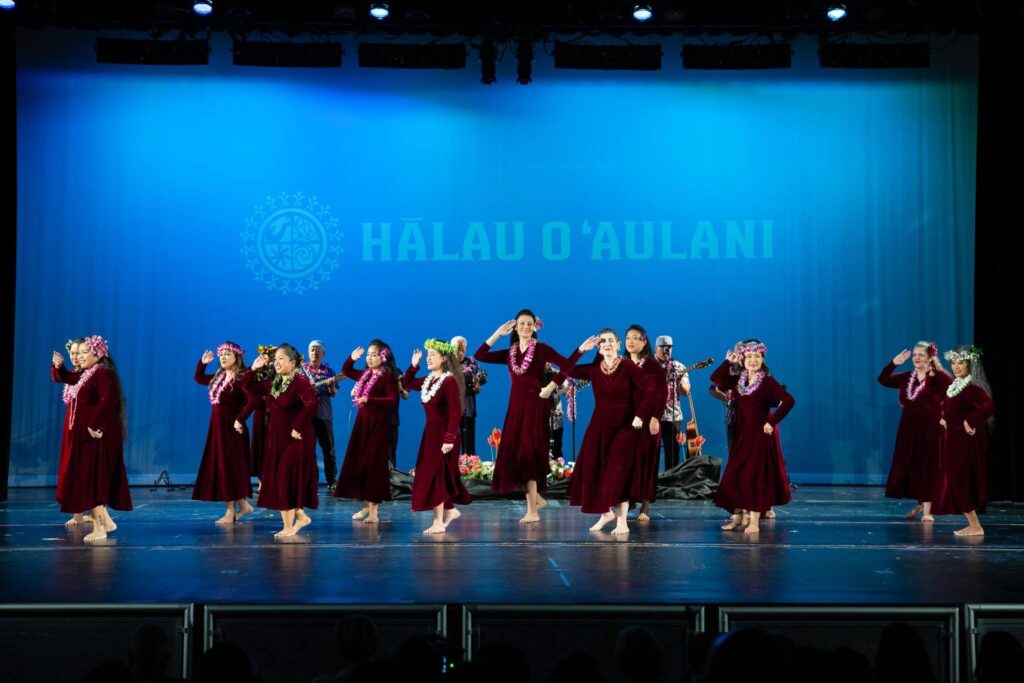
Hula ‘auana is the modern style of hula that developed in Hawai‘i after Western contact, and it is often accompanied by beautiful melodies and instruments such as the ‘ukulele and steel guitar. Unlike the more traditional hula kahiko, which is deeply rooted in ancient chants and sacred rituals, hula ‘auana is generally more relaxed and expressive. It uses graceful, flowing movements to tell stories about love, nature, and everyday life.
The dancers’ costumes are usually bright and elegant, often featuring dresses or skirts that move gently with each step. Because of its softer style and musical accompaniment, hula ‘auana is commonly performed for entertainment and is widely recognized around the world as a symbol of Hawaiian culture.
Nani Nani (Kūpuna)
Speaks of beauty and love
Miloli‘i (Kāne)
Celebrating the beauty and spirit of the Miloli‘i fishing village and its coastal lifestyle
Hale‘iwa Hula (Keiki)
Celebrating the joyful spirit and scenic beauty of Hale‘iwa (Implements: kala ‘au)
Pōla‘ila‘i (Wāhine)
A song describing peaceful beauty and companionship
Na ‘Ono O Ka ‘Āina (Kāne)
The Delectable and Delicious Things of the Land, highlighting the deep connection between Hawaiian people and their land (‘āina)
Matsonia (Wāhine)
Song from the 1920’s about a woman’s longing for her musician husband about the S.S. Matsonia ship
Aloha Ku‘u Pua (Kūpuna)
Queen Lili‘uokalani expressing love for her people and land; flowers from her garden at Paoakalani
Palisa (Keiki)
A classic tune about the wonders and romance of Paris, France
Pule No Malia (Everyone)
Prayers showing the call for collective calm and support
Alu Like (Everyone)
A traditional closing song for events meaning “work together” or “unite”